

The internet has a talent for turning the simplest ideas into global trends. One of the most unusual examples is Tung Tung Tung Sahur, a strange wooden character that became widely recognized through short videos, memes, remixes, and fan-created content.
At first glance, the character looks like a simple AI-generated wooden figure carrying a baseball bat. Its unusual appearance, repeated “tung tung” sound, and mysterious Indonesian narration helped it stand out from thousands of other internet memes.
Although many people associate Tung Tung Tung Sahur with the wider “Italian brainrot” trend, its cultural roots are actually connected to Indonesia and the traditional practice of waking people for sahur during Ramadan.
Understanding the character requires looking at both sides of the trend: its traditional inspiration and its modern internet identity.
What Is Tung Tung Tung Sahur?
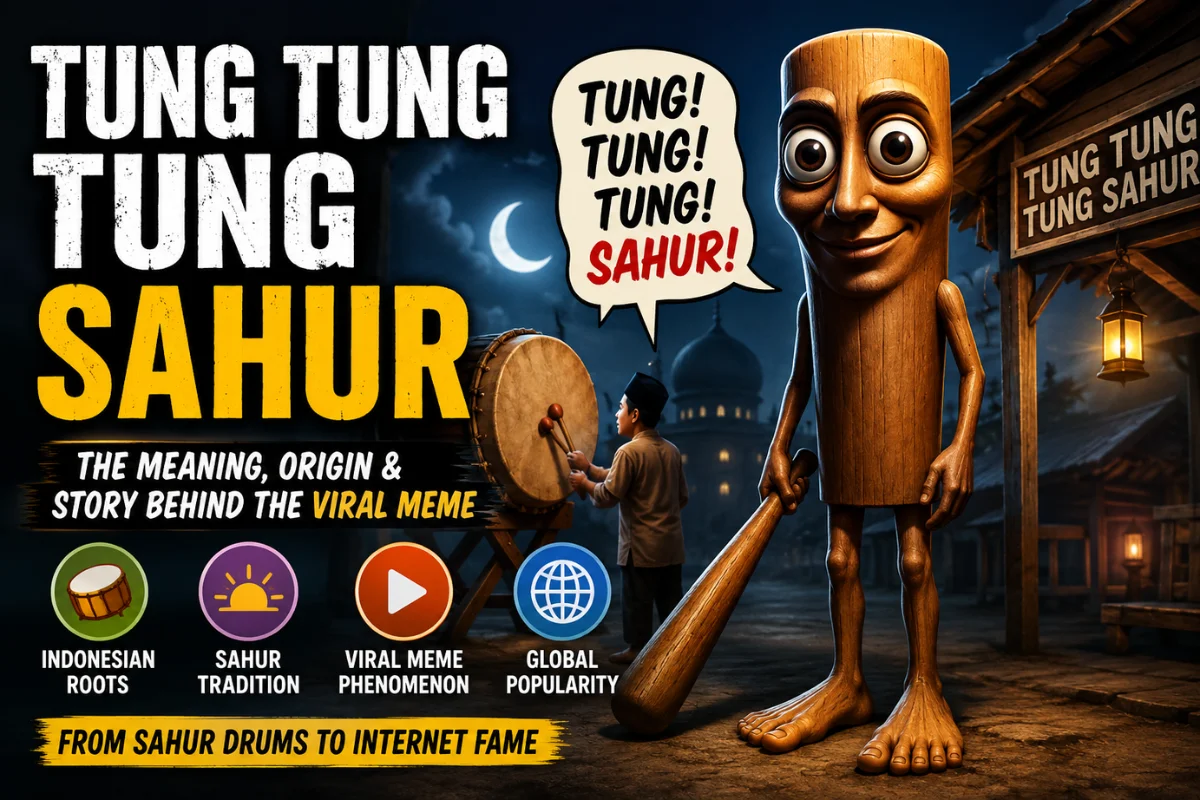
Tung Tung Tung Sahur is a fictional internet meme character associated with AI-generated brainrot content. It is generally portrayed as a tall wooden humanoid figure with large eyes, a simple face, bare feet, and a wooden baseball bat.
The character is accompanied by an Indonesian voice-over and a repeated “tung tung tung” sound.
The name itself combines the sound of a traditional drum or wooden percussion instrument with the word “sahur,” which refers to the pre-dawn meal eaten during Ramadan.
The result is a bizarre combination of familiar cultural imagery and surreal internet humor.
The character became part of the broader brainrot phenomenon, where creators use artificial intelligence, strange characters, exaggerated narration, and intentionally nonsensical stories to produce highly shareable short-form videos.
What Does Tung Tung Tung Sahur Mean?
The phrase has a much older cultural meaning than the meme itself.
In Indonesia, “tung tung tung” can imitate the sound of traditional percussion used to alert people that it is time for sahur. During Ramadan, communities have historically used drums and other sounds to wake people before dawn.
The word “sahur” refers to the meal eaten before the daily fast begins.
Therefore, the original idea behind the phrase is relatively simple: a rhythmic sound announcing that it is time to wake up and eat sahur.
Know Your Meme notes that the phrase was already used online years before the viral character appeared. One early documented online example dates to 2013, showing that the expression itself did not originate with the 2025 meme.
The meme transformed this familiar phrase into something completely different.
The Origin of Tung Tung Tung Sahur
The viral character emerged in February 2025.
The earliest widely documented version was posted on TikTok by Indonesian creator @noxaasht on February 28, 2025. The post featured an AI-generated wooden creature in a nighttime setting, accompanied by an Indonesian narration describing a frightening creature associated with sahur.
The concept was deliberately strange.
According to the fictional story attached to the character, a person who is called for sahur three times and does not respond may encounter the mysterious creature.
This gave the meme a simple horror-style premise while keeping the presentation humorous and absurd.
The original video quickly attracted enormous attention. Know Your Meme reports that it passed 31 million views and 2.4 million likes within about a month. Other later references have reported even higher figures as the content continued circulating.
Tung Tung Tung Sahur and Indonesian Culture
One reason the character stands out is its connection to a real cultural tradition.
The meme did not invent the idea of making a sound to wake people for sahur. The “tung tung” element is connected to percussion sounds associated with Ramadan wake-up traditions in Indonesia and parts of Southeast Asia.
Know Your Meme explains that the bedug, a large double-headed drum used in Indonesian and Malaysian Muslim communities, can be used to signal prayer times and announce sahur during Ramadan.
This cultural connection makes the character different from many completely fictional brainrot characters.
The internet took a recognizable tradition and transformed it into a surreal fictional personality.
That combination helped the meme appeal to people who understood the original reference while also making it accessible to audiences who simply found the character funny or unusual.
Why Is It Called “Italian Brainrot”?
The term “Italian brainrot” became popular as a label for a wider internet trend involving bizarre AI-generated characters, strange names, robotic narration, and intentionally nonsensical stories.
Characters such as Tralalero Tralala, Bombardiro Crocodilo, and Ballerina Cappuccina became associated with the trend.
However, Tung Tung Tung Sahur has an important distinction.
Its roots are Indonesian rather than Italian.
Several sources describe it as an Indonesian brainrot character that became incorporated into the much larger global brainrot ecosystem. Vulture has also noted that the broader Italian brainrot phenomenon eventually expanded to include unrelated characters and cultural variations, including Tung Tung Tung Sahur.
Calling it “Italian brainrot” therefore describes the internet trend surrounding it more than its actual cultural origin.
What Does the Character Look Like?
The classic Tung Tung Tung Sahur design is intentionally simple and unsettling.
The character is usually shown as a wooden humanoid figure with:
- A long wooden body
- Large human-like eyes
- A simple facial expression
- Thin arms and legs
- Bare feet
- A wooden baseball bat
The design has a deliberately low-quality AI aesthetic.
Rather than looking like a polished animated character, it feels strange and slightly unfinished. That awkward appearance is part of the joke.
The character’s visual simplicity also makes it easy for other creators to modify.
Fans have created alternative versions, edits, animations, battles, music videos, and crossover concepts featuring the character.
The Fictional Lore Behind the Meme
Internet communities quickly developed additional stories around Tung Tung Tung Sahur.
The central legend says that the character appears during sahur and may visit people who ignore repeated calls to wake up.
This gives the meme a playful horror element.
It is similar to an urban legend: there is a simple rule, a strange creature, and a consequence for breaking that rule.
The story is fictional and should not be confused with an actual religious belief.
The internet has expanded this basic idea into a much larger fictional universe involving battles, relationships, transformations, and other brainrot characters.
Some fan-created sources even present detailed “lore” surrounding the character, including fictional battles and alliances. These stories are part of the meme community rather than established cultural history.
Key Facts About Tung Tung Tung Sahur
| Feature | Details |
| Character type | AI-generated meme character |
| Cultural roots | Indonesian Ramadan tradition |
| Viral emergence | February 2025 |
| Original creator commonly credited | TikTok creator @noxaasht |
| Main theme | Sahur wake-up call |
| Visual appearance | Wooden humanoid with a bat |
| Internet category | Brainrot / meme culture |
| Main platforms | TikTok, YouTube, Instagram and other social platforms |
| Common nickname | Tung Tung or Triple T |
| Cultural meaning | Inspired by sounds used to announce sahur |
How Tung Tung Tung Sahur Went Viral
The character benefited from several characteristics that perform well on modern social media.
First, it was visually memorable.
A wooden creature with enormous eyes and a baseball bat is unusual enough to stop someone while scrolling.
Second, the audio was repetitive.
The phrase “tung tung tung sahur” is easy to remember and reproduce. Repetition is particularly effective for short-form video because audiences can recognize a sound almost immediately.
Third, the concept was easy to remix.
Creators did not need complicated equipment or an expensive production process. They could create a new version by changing the setting, adding another character, creating a battle, or placing the figure into a popular game or trend.
This helped the meme travel between different online communities.
Music and Remixes
The character eventually moved beyond simple image memes and short videos.
Music creators began producing tracks based on the phrase and character.
One notable example is a 2025 track titled “Tung Tung Tung Sahur” by W&W, released through Rave Culture. The song demonstrates how brainrot characters can move from meme culture into music and remix culture.
Other creators produced phonk-style edits, sped-up versions, humorous remixes, and videos designed specifically for short-form platforms.
This expansion helped the character remain recognizable even when the original meme format changed.
Tung Tung Tung Sahur on Social Media
Social media played a major role in the character’s growth.
TikTok provided the initial environment for the viral character, while YouTube Shorts, Instagram Reels, Reddit, and other platforms helped spread variations.
The short-video format is particularly suitable for brainrot memes because the viewer does not need much context.
A person can see the character, hear the unusual audio, understand the basic joke, and share the video within seconds.
This makes the meme highly portable across languages and countries.
Even people unfamiliar with Indonesian culture could enjoy the character simply because of its strange appearance and repetitive sound.
Why People Find Tung Tung Tung Sahur Funny
The humor is largely based on contrast.
The concept starts with something ordinary: waking someone for sahur.
It then adds an absurd fictional monster, a baseball bat, dramatic narration, and AI-generated visuals.
The serious delivery makes the idea even more ridiculous.
This is a common feature of brainrot humor. The joke does not necessarily depend on a traditional punchline.
Instead, the entertainment comes from repetition, randomness, unexpected combinations, and the shared experience of recognizing a popular internet reference.
Is Tung Tung Tung Sahur Still Popular?
The meme has evolved rather than simply disappearing.
By 2026, Tung Tung Tung Sahur continued to appear in fan communities, games, videos, remixes, and discussions surrounding brainrot culture.
Its presence has also extended into gaming culture. Recent reporting has highlighted the character’s appearance as a Fortnite skin alongside other brainrot characters, showing how viral meme characters can move into mainstream entertainment.
The wider brainrot trend has also generated merchandise, music, fan art, games, and other forms of user-created content.
This demonstrates that modern memes can develop beyond a single viral video.
The Influence of AI on the Meme
Artificial intelligence is an important part of the Tung Tung Tung Sahur phenomenon.
Traditional memes often required users to create images manually or edit existing photographs.
AI image and audio tools have made it much easier to produce strange fictional characters quickly.
Creators can generate a visual concept, add narration, create a story, and turn it into a short video with relatively little production effort.
This has changed the speed at which internet characters can appear and spread.
Tung Tung Tung Sahur is therefore not only a meme but also an example of how generative AI is influencing online entertainment.
Cultural Context Matters
Although the character is fictional, its cultural inspiration deserves to be understood.
Sahur is an important part of Ramadan for Muslims who observe the fast. Turning a familiar sahur wake-up sound into a humorous internet character can be entertaining, but people should still understand the difference between a meme and the cultural practice that inspired it.
The original tradition is much older and more meaningful than the internet character.
Recognizing that distinction helps explain why the meme became interesting in the first place.
Final Thoughts
Tung Tung Tung Sahur is one of the clearest examples of how modern internet culture can transform a familiar cultural reference into a global meme.
Its roots come from the Indonesian tradition of waking people for sahur, while its viral identity comes from AI-generated imagery, strange storytelling, repetitive audio, and the wider brainrot movement.
The character became popular because it was simple, recognizable, easy to remix, and unusual enough to capture attention.
What began as a strange wooden figure evolved into a broader internet personality appearing in videos, music, fan art, games, and online discussions.
Its story also shows how modern memes are increasingly shaped by AI and cross-cultural internet communities. A phrase rooted in a specific Ramadan tradition can now be recognized by people around the world who may know nothing about its original context.
That combination of culture, technology, humor, and social sharing is what makes Tung Tung Tung Sahur more than just another random meme. It is a snapshot of how quickly digital culture can create, transform, and globalize new forms of entertainment.
