

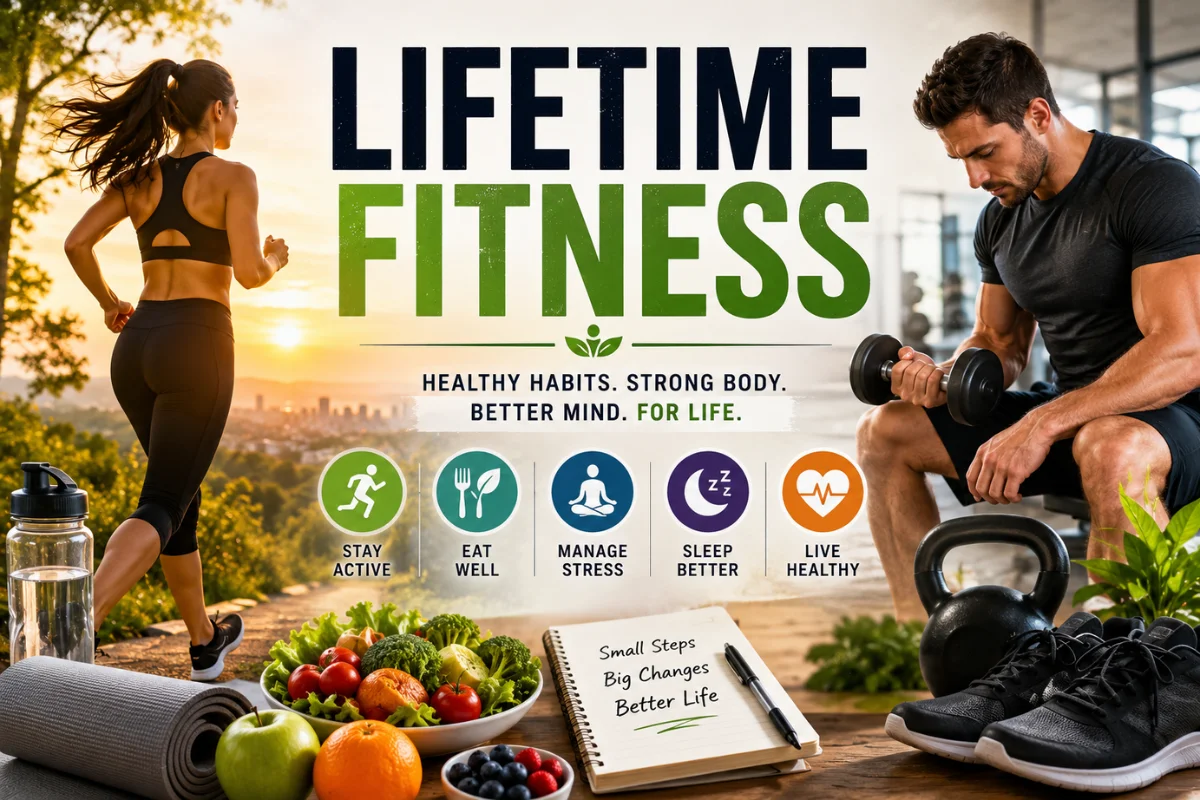
Living a healthy lifestyle is no longer just about losing weight or building muscle. Today, people are focusing on lifetime fitness—a long-term approach to staying physically active, mentally strong, and emotionally balanced throughout every stage of life. Instead of chasing quick results, lifetime fitness encourages healthy habits that can be maintained for years.
Whether you’re just beginning your fitness journey or looking for ways to stay active as you age, adopting a lifelong fitness mindset can improve your overall quality of life. Regular exercise, nutritious eating, quality sleep, and stress management all work together to help you remain healthy and energetic.
This guide explains what lifetime fitness means, why it matters, and how anyone can build sustainable habits that support long-term wellness.
What Is Lifetime Fitness?
Lifetime fitness refers to maintaining an active and healthy lifestyle over the course of your life rather than following short-term workout programs.
Many people start exercising to prepare for a vacation, a sporting event, or a special occasion. While these goals can provide motivation, lifetime fitness focuses on consistency instead of temporary success.
The idea is simple: develop habits that become part of your daily routine so that staying healthy feels natural rather than forced.
This approach combines physical activity, balanced nutrition, mental wellness, recovery, and preventive healthcare into one sustainable lifestyle.
Why Lifetime Fitness Is Important
A long-term commitment to fitness provides benefits that extend far beyond physical appearance.
Regular movement helps strengthen the heart, muscles, bones, and joints while lowering the risk of many chronic diseases. Staying active also improves flexibility, balance, and endurance, making everyday tasks easier to perform.
Beyond physical health, exercise supports mental well-being by reducing stress, improving mood, and boosting self-confidence. Many people also experience better sleep, increased productivity, and higher energy levels when they maintain a consistent fitness routine.
The greatest advantage of lifetime fitness is that these benefits continue to grow over time.
The Core Elements of Lifetime Fitness
Building lifelong health requires attention to several important areas.
Regular Physical Activity
Exercise is the foundation of every fitness plan.
You don’t need to spend hours in the gym every day. Walking, cycling, swimming, strength training, yoga, and recreational sports all contribute to better health.
The key is choosing activities you genuinely enjoy because you’re much more likely to continue doing them consistently.
Aim for a mix of cardiovascular exercise, strength training, flexibility work, and balance exercises each week.
Balanced Nutrition
Fitness begins in the kitchen as much as it does in the gym.
A healthy eating pattern includes lean proteins, whole grains, fruits, vegetables, healthy fats, and plenty of water. Instead of following restrictive diets, focus on creating balanced meals that provide your body with lasting energy.
Small improvements in eating habits often produce better long-term results than extreme dieting.
Learning portion control and practicing mindful eating can also help maintain a healthy weight without feeling deprived.
Quality Sleep
Recovery is just as important as exercise.
During sleep, the body repairs muscles, restores energy, and supports brain function. Adults generally benefit from seven to nine hours of quality sleep each night.
Poor sleep can reduce workout performance, increase fatigue, and make healthy eating more difficult.
Creating a consistent bedtime routine helps improve both recovery and overall wellness.
Mental and Emotional Wellness
Good health isn’t only physical.
Managing stress through meditation, deep breathing, hobbies, or spending time with loved ones supports emotional well-being. Maintaining a positive mindset makes it easier to stay motivated and overcome setbacks.
Many people find that regular exercise naturally improves mental clarity and reduces daily stress.
When physical and mental health improve together, maintaining lifelong fitness becomes much more achievable.
Benefits of Following a Lifetime Fitness Lifestyle
People who commit to long-term fitness often notice improvements across every area of their lives.
Better Heart Health
Regular exercise strengthens the cardiovascular system by improving blood circulation and supporting healthy blood pressure.
Activities like brisk walking, jogging, cycling, and swimming help keep the heart strong while reducing the risk of cardiovascular disease.
Increased Strength and Mobility
Maintaining muscle strength becomes increasingly important with age.
Strength training supports healthy bones, improves posture, and makes everyday movements easier. Combined with flexibility exercises, it also helps reduce stiffness and lowers the risk of falls and injuries.
Remaining active allows people to maintain their independence for longer.
Healthy Weight Management
Lifetime fitness encourages steady, sustainable weight management instead of rapid weight loss.
By combining consistent physical activity with nutritious eating habits, people can maintain a healthy body composition without relying on extreme diets or exhausting workout programs.
Long-term consistency always produces better results than short bursts of motivation.
Improved Energy Levels
Many people expect exercise to leave them feeling tired, but the opposite is often true.
Regular movement improves circulation, increases stamina, and helps the body use oxygen more efficiently. As overall fitness improves, daily activities become less physically demanding.
This increased energy supports productivity at work, school, and home.
How to Build a Lifetime Fitness Routine
Creating a sustainable routine starts with realistic expectations.
Set Achievable Goals
Instead of focusing only on appearance, create goals that improve overall health.
Examples include walking every day, completing three strength workouts each week, drinking more water, or improving flexibility.
Small achievements build confidence and make larger goals easier to reach over time.
Find Activities You Enjoy
The best workout is the one you’ll actually continue doing.
Some people enjoy lifting weights, while others prefer dancing, hiking, cycling, or playing sports. Trying different activities helps you discover what keeps you motivated.
Fitness should feel rewarding rather than like a daily obligation.
Stay Consistent
Perfection isn’t necessary.
Missing one workout doesn’t erase your progress. The goal is to return to your routine and continue making healthy choices.
Consistency over months and years matters far more than occasional periods of intense training.
Staying Motivated for the Long Run
Maintaining motivation is one of the biggest challenges in any fitness journey. The good news is that motivation doesn’t have to stay high every day. Developing healthy habits is far more important than relying on temporary enthusiasm.
Track Your Progress
Keeping track of your workouts helps you see how far you’ve come.
You can record your exercise sessions, walking distance, strength improvements, or personal fitness goals in a notebook or a fitness app. Seeing steady progress provides encouragement and keeps you focused on long-term success.
Remember that even small improvements add up over time.
Mix Up Your Routine
Doing the same workout every day can become repetitive.
Adding variety keeps exercise enjoyable while challenging different muscle groups. You can alternate between strength training, walking, cycling, swimming, yoga, or group fitness classes throughout the week.
Changing your routine also helps prevent workout plateaus and reduces the risk of overuse injuries.
Exercise with Others
Working out with family members, friends, or a fitness community can make exercise more enjoyable.
Having a workout partner creates accountability and provides encouragement on days when motivation is low. Many people find that group activities make it easier to stay committed to their fitness goals.
Social support often becomes one of the strongest reasons people continue exercising for years.
Common Mistakes to Avoid
Many people lose motivation because they expect immediate results. Avoiding a few common mistakes can make your fitness journey much more successful.
Setting Unrealistic Expectations
Trying to achieve dramatic results in a short period often leads to disappointment.
Instead, focus on gradual improvements that can be maintained over time. Lasting progress is built through patience and consistency.
Skipping Recovery
Exercise strengthens the body, but recovery is when your body adapts and becomes stronger.
Taking rest days, stretching regularly, and getting enough sleep help prevent injuries while improving long-term performance.
Ignoring recovery can lead to fatigue, burnout, and slower progress.
Ignoring Nutrition
Exercise alone cannot compensate for poor eating habits.
A balanced diet provides the nutrients needed for energy, muscle recovery, and overall health. Healthy nutrition works together with regular exercise to produce lasting results.
Comparing Yourself to Others
Everyone has different goals, abilities, and starting points.
Comparing your progress with someone else’s can reduce motivation unnecessarily. Focus on becoming healthier than you were yesterday rather than competing with others.
Lifetime Fitness for Every Age
One of the greatest benefits of lifetime fitness is that it can be adapted to every stage of life.
| Age Group | Recommended Focus | Benefits |
| Children & Teens | Active play, sports, and basic strength | Healthy growth, coordination, and confidence |
| Young Adults | Strength training, cardio, flexibility | Muscle development and improved endurance |
| Adults | Balanced exercise, nutrition, and stress management | Better overall health and disease prevention |
| Older Adults | Walking, balance exercises, light strength training | Improved mobility, independence, and fall prevention |
No matter your age, it’s never too early—or too late—to adopt healthier habits.
Technology and Lifetime Fitness
Technology has made maintaining a healthy lifestyle easier than ever.
Fitness trackers, smartwatches, and mobile apps help people monitor daily activity, heart rate, sleep quality, calorie intake, and workout progress.
Online workout classes also provide convenient exercise options for people who prefer training at home. Virtual coaching and personalized fitness plans make professional guidance more accessible than ever before.
While technology can be a valuable tool, it works best when combined with consistency and healthy daily habits.
Creating a Sustainable Lifestyle
Lifetime fitness isn’t about following strict rules or chasing perfection.
Instead, it means making healthy decisions consistently over many years. Small choices—such as taking the stairs, drinking more water, preparing nutritious meals, or going for a daily walk—can have a significant impact on long-term health.
Rather than aiming for perfect workouts every day, focus on building routines that fit naturally into your lifestyle.
The more sustainable your habits become, the easier they are to maintain for life.
Final Thoughts
Lifetime fitness is much more than a workout routine—it’s a lifelong commitment to better health, greater energy, and improved well-being. By combining regular exercise, balanced nutrition, quality sleep, stress management, and realistic goals, anyone can create healthy habits that last for years.
The journey doesn’t require perfection or extreme effort. Small, consistent actions performed day after day produce meaningful results over time.
Whether you’re beginning your fitness journey or looking to strengthen your existing routine, adopting a lifetime fitness mindset is one of the best investments you can make in your future health. Every healthy choice you make today contributes to a stronger, happier, and more active tomorrow.
