

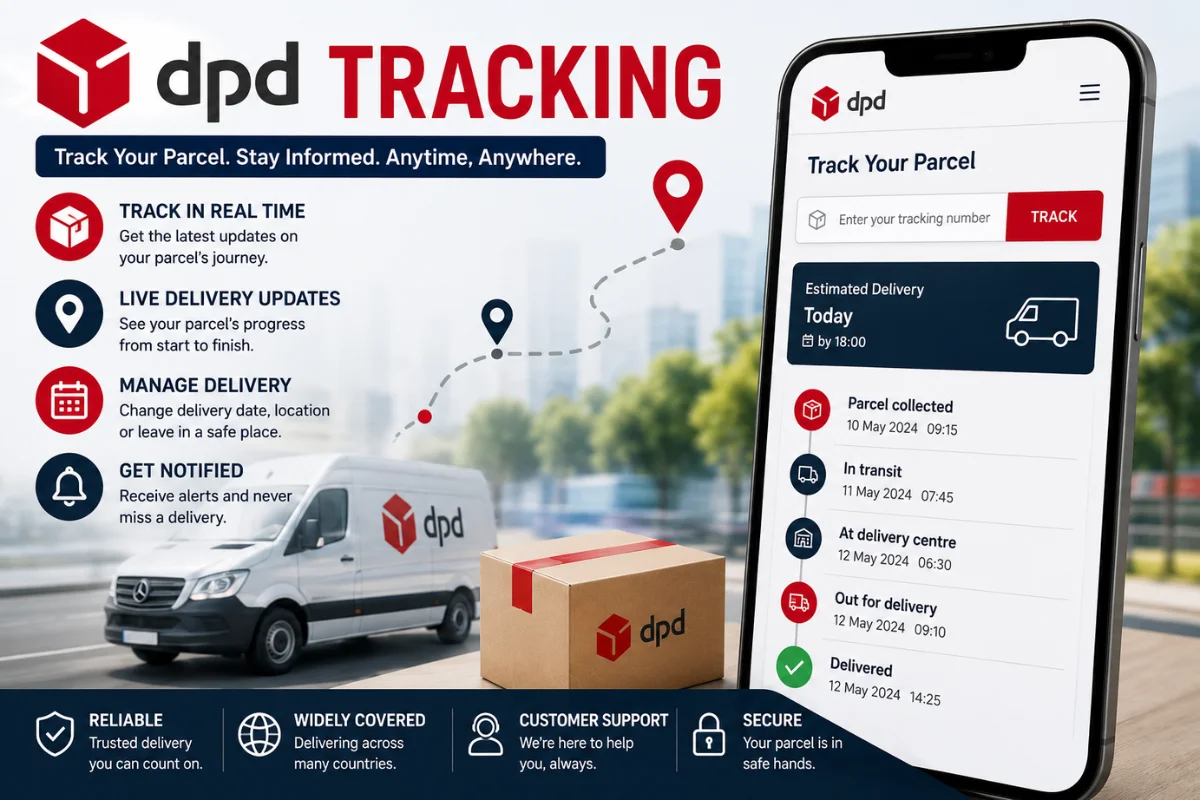
Waiting for an online order can be exciting, but it can also become frustrating when you do not know where your parcel is or when it will arrive. This is where parcel tracking becomes useful. Instead of waiting without information, customers can use tracking services to follow the progress of their shipments and understand what is happening during delivery.
DPD tracking is designed to give customers information about the movement and status of parcels. Depending on the country and DPD service being used, tracking can provide information about the parcel’s journey, expected delivery, live tracking, and available delivery options.
DPD operates across multiple European markets and other regions, so the exact tracking page, terminology, delivery options, and tracking-number format can vary by country. However, the basic process remains similar: enter the parcel number or reference provided by the sender and review the latest shipment status.
What Is DPD Tracking?
DPD tracking is an online service that allows customers to check the progress of a parcel after it has been shipped.
Every shipment is assigned a tracking or parcel number. Customers can enter this number into the relevant DPD tracking system to view available information about their delivery.
In several DPD markets, the parcel number is a 14-digit number. However, some countries use different formats or additional reference numbers, so customers should use the number supplied by the sender or shown in their DPD notification.
Tracking is useful for both customers and businesses. A customer can check whether a parcel has been dispatched, processed, transported, or prepared for delivery. Businesses can use shipment information to keep customers informed and manage deliveries more effectively.
How Does DPD Tracking Work?
The tracking process is relatively simple.
First, the sender creates a shipment with DPD. Once the parcel enters the DPD network, it receives a parcel number that can be used to identify the shipment.
As the parcel moves through different stages of the delivery network, tracking information can be updated.
A customer can then enter the parcel number on the appropriate DPD tracking page. The system displays the latest available status and, depending on the service and country, may provide additional information about the parcel’s journey.
Some DPD services also provide live tracking, allowing recipients to follow the delivery more closely when the parcel is approaching its destination.
How to Track a DPD Parcel
Tracking a DPD parcel normally takes only a few steps.
Find Your Tracking Number
The first step is finding the parcel number.
The sender usually provides this number in an order confirmation, shipping email, SMS, or other delivery notification. In some countries, the number may also appear on a notification card if a delivery attempt was unsuccessful.
Open the DPD Tracking Service
Go to the DPD website for the country handling your parcel.
This is important because DPD operates different websites and services in different markets. Using the correct regional website can make it easier to access the tracking information associated with your shipment.
Enter the Parcel Number
Enter your tracking number into the tracking field.
Check the number carefully before submitting it. A single incorrect digit can prevent the system from finding the shipment.
Review the Latest Status
Once the number is accepted, you should see the latest available information about the parcel.
Depending on the service, this may include the parcel’s current location, delivery progress, expected delivery information, or previous tracking events.
Common DPD Tracking Statuses Explained
Tracking updates can sometimes be confusing, especially when customers see unfamiliar terms.
The exact wording can vary between DPD countries and services, but most statuses describe a similar stage in the delivery process.
| DPD Tracking Status | General Meaning | What You Should Do |
| Shipment information received | The shipment has been registered | Wait for the parcel to enter the network |
| In transit | The parcel is moving through the network | Continue monitoring tracking |
| At delivery centre | The parcel has reached a local facility | Check for delivery or redirection options |
| Out for delivery | The parcel is with the driver or being prepared for final delivery | Keep an eye on delivery updates |
| Delivered | DPD records the parcel as delivered | Check the delivery location if you cannot find it |
| Delivery attempted | A delivery attempt was made | Review available redelivery or pickup options |
| Delayed | The parcel is experiencing an interruption | Check for a new estimated delivery update |
These descriptions are general because tracking terminology can differ according to the DPD country and service.
What Does “In Transit” Mean?
One of the most common tracking messages is in transit.
Generally, this means the parcel is moving through the DPD delivery network. It may be traveling between sorting facilities, regional depots, or other transportation points.
“In transit” does not necessarily mean the parcel is currently inside a delivery vehicle heading toward your home.
If the status remains unchanged for a short period, there may be no reason to worry. Tracking information is updated as the parcel reaches new stages in the network.
What Does “Out for Delivery” Mean?
“Out for delivery” usually indicates that the parcel has reached the final stage of its journey and is being prepared for delivery to the recipient.
Depending on the local DPD service, additional delivery information may become available at this point.
Some DPD services offer live tracking that can provide a more precise view of the delivery process. For example, DPD’s Luxembourg service describes live tracking as allowing recipients to follow delivery in real time and see when the driver is approaching.
However, customers should remember that delivery estimates are not always guaranteed. Traffic, weather, operational issues, and other unexpected circumstances can affect the final delivery time.
DPD Live Tracking
Live tracking is one of the more useful developments in modern parcel delivery.
Instead of simply showing that a parcel is on its way, live-tracking services can provide more detailed information when a delivery is approaching.
DPD’s regional services describe live tracking as a way to monitor the delivery process in real time. Some services can provide an estimated delivery window and allow recipients to make delivery changes shortly before arrival.
This can be especially helpful for people who work from home, have limited availability, or need to make sure someone is present to receive a package.
Can You Change a DPD Delivery?
In many DPD markets, recipients can modify delivery arrangements.
Depending on the country and shipment, options may include changing the delivery day, redirecting the parcel to a pickup location, selecting a safe place, or arranging delivery to another location or neighbour.
For example, DPD’s regional guidance explains that recipients can use available redirection options to change the delivery day or destination.
The options available to you depend on the specific shipment. Therefore, not every parcel will provide the same choices.
Using the myDPD App
DPD also provides digital tools in several markets, including the myDPD app.
The app can bring tracking and delivery-management features together in one place. Depending on the market, users can monitor deliveries, change delivery preferences, redirect parcels, and manage notifications.
DPD describes myDPD as providing live tracking, redirection options, delivery preferences, and notification controls.
For people who regularly receive parcels, using the app can be more convenient than repeatedly entering tracking numbers on a website.
Why Has My DPD Tracking Not Updated?
Sometimes a parcel’s tracking information may appear unchanged for several hours or longer.
This does not automatically mean that the parcel is lost.
Tracking systems depend on scans and status updates throughout the delivery network. If a parcel is traveling between facilities, there may be a period when no new event appears.
International shipments can also take longer to show updates because they may pass through multiple transportation and processing stages.
If the tracking remains unchanged for an unusually long time or the parcel passes its expected delivery date, it is reasonable to contact DPD or the sender for assistance. DPD itself advises customers to contact support when tracking remains unchanged for a long period or a parcel does not arrive as indicated.
What If DPD Says My Parcel Was Delivered?
A particularly frustrating situation occurs when tracking says delivered, but the parcel cannot be found.
Before contacting customer service, check the locations where the parcel may have been left.
Depending on the delivery instructions and local service, the parcel may have been left in a designated safe place or delivered to a neighbour.
DPD’s customer guidance recommends checking these possibilities when a parcel is marked as delivered but cannot immediately be located.
If the parcel still cannot be found, contact the appropriate DPD support channel or the sender as soon as possible.
DPD Tracking for International Shipments
International deliveries can involve more tracking events than domestic shipments.
A parcel may move through several facilities and transportation networks before reaching the destination country.
Delivery times also vary according to the destination and service selected. DPD notes that international delivery times depend on the destination country, while domestic delivery times can be shorter in some markets.
For this reason, international tracking should be viewed as a process rather than a simple journey from the seller directly to the customer’s address.
Customs processing, border procedures, transportation schedules, and local delivery conditions can all affect the timeline.
How Businesses Use DPD Tracking
DPD tracking is not only useful for individual customers.
Online stores and other businesses use shipment information to monitor orders after they leave the warehouse. Tracking can help businesses answer customer questions, identify delayed shipments, and confirm delivery.
DPD also provides business-oriented tracking capabilities in some markets. For example, its French business service provides shipment overviews, filters for undelivered parcels, tracking history, and proof-of-delivery access.
This type of visibility can be particularly valuable for companies handling a large number of shipments.
Tips for Getting the Most From DPD Tracking
A few simple habits can make parcel tracking easier.
Keep your tracking number safe. Save the shipping email or order confirmation until the parcel arrives.
Use the correct DPD regional website. DPD services differ between countries, so the local website is usually the best starting point.
Check tracking before contacting support. The latest tracking event may already explain a delay or delivery attempt.
Pay attention to notifications. Emails, SMS messages, and app notifications may provide delivery information that does not immediately appear in a general order page.
Check redirection options early. If you know you will not be available, look at the available delivery changes before the parcel reaches the final delivery stage.
Final Thoughts
DPD tracking makes parcel delivery easier to understand by giving customers visibility into the progress of their shipments.
From the initial shipment information to transit updates, local delivery-centre scans, and final delivery, tracking can provide useful information at each stage of the journey.
Modern DPD services also go beyond basic status updates. Depending on the country and shipment, customers may have access to live tracking, delivery notifications, redirection options, pickup locations, and delivery preferences.
The most important thing to remember is that tracking information can vary by country, service, and shipment. If an update does not change immediately, it does not necessarily mean something has gone wrong.
For the most accurate information, use the tracking number provided by your sender and check the official DPD tracking service for your delivery region. If a parcel remains delayed, shows an unexpected status, or is marked delivered without being found, contacting DPD or the sender is the best next step.
