

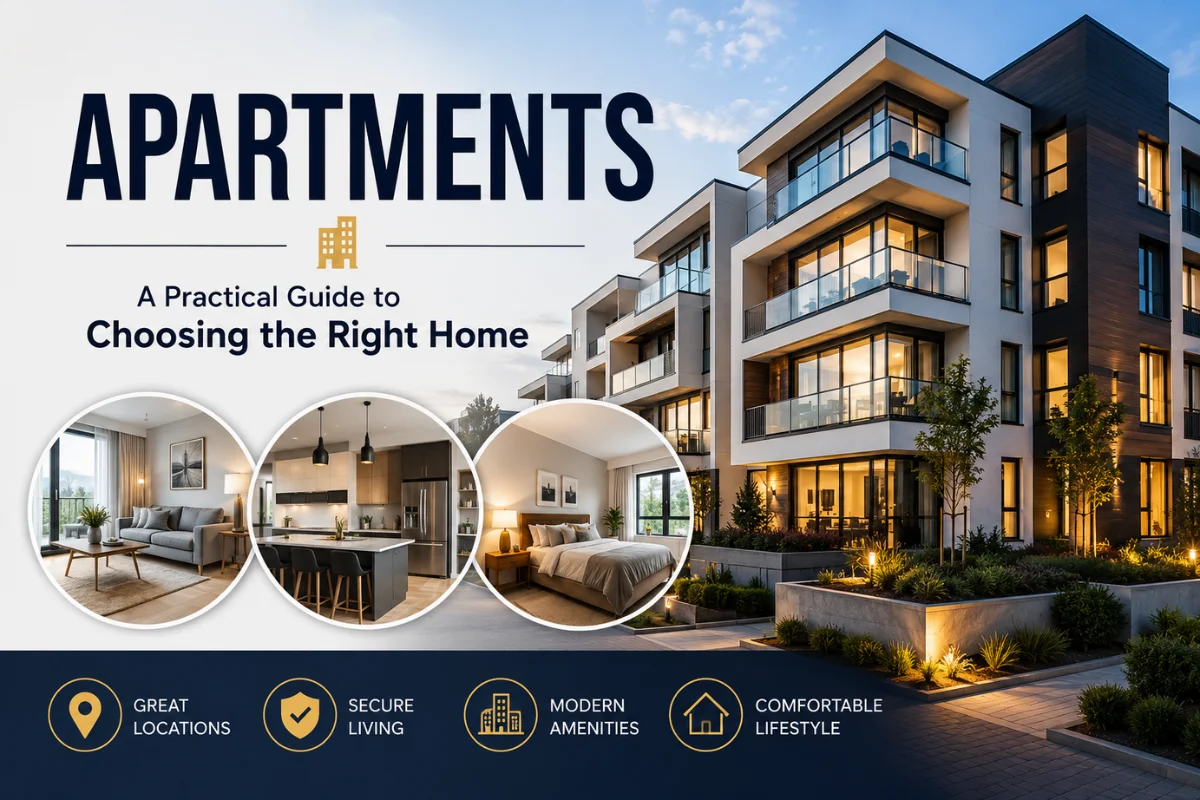
Apartments have become an increasingly practical housing option for people who want a comfortable home without the responsibilities that often come with owning or maintaining a large independent house. From young professionals and small families to retirees and property investors, different types of buyers and renters can benefit from apartment living.
The modern apartment is also very different from the basic flats of the past. Many residential buildings now combine private living spaces with security, parking, fitness facilities, shared areas, digital services, and other amenities. At the same time, rising housing costs and limited space in many urban areas are encouraging people to think more carefully about how and where they live.
Recent housing trends show that apartment markets can behave very differently depending on location. Some cities are seeing stronger demand because of limited supply, while others are becoming more balanced as new apartment construction adds inventory.
What Is an Apartment?
An apartment is a self-contained residential unit within a larger building or residential complex. It normally includes essential spaces such as a bedroom or bedrooms, a living area, a kitchen, and one or more bathrooms.
Apartments can range from compact studios to spacious multi-bedroom homes. The right size depends on household needs, budget, lifestyle, and how long the resident expects to stay.
Unlike a detached house, an apartment usually shares certain facilities with other residents. These can include entrances, elevators, parking areas, hallways, gardens, gyms, swimming pools, or community spaces.
This shared structure can make apartment living more convenient, particularly for people who prefer a managed residential environment.
Why Apartment Living Is Becoming Popular
One of the biggest reasons people choose apartments is convenience. A well-managed building can provide several services and facilities within the same development.
Security is another important consideration. Many modern apartment communities use controlled entrances, security personnel, CCTV systems, and other measures designed to make residents feel safer.
Location also plays a major role. Apartments are frequently developed in or around urban areas where residents want easier access to offices, schools, shopping centers, restaurants, public transportation, and healthcare facilities.
Another advantage is the variety of choices. Buyers and renters can usually find apartments in different sizes and price ranges, making it easier to select a property that matches their circumstances.
Common Types of Apartments
Apartments come in several layouts, each designed for different lifestyles.
Studio Apartments
A studio is generally a compact unit where the bedroom and living space are combined. The kitchen may occupy a separate corner or small section.
Studios are often suitable for single residents, students, and professionals who want a convenient home without paying for unnecessary space.
One-Bedroom Apartments
A one-bedroom apartment normally provides a separate bedroom along with a living room, kitchen, and bathroom.
This layout can offer more privacy than a studio while remaining relatively affordable and easy to maintain.
Two-Bedroom Apartments
Two-bedroom apartments are popular with couples, small families, roommates, and buyers looking for an additional room that can be used as an office or guest room.
The additional space can make this type of apartment more flexible for changing household needs.
Three-Bedroom Apartments
Three-bedroom apartments are generally designed for larger families. They provide more private rooms and living space but typically come with higher purchase prices or rents.
Before selecting a larger unit, buyers should consider whether the additional space is genuinely necessary.
Key Features to Consider Before Choosing an Apartment
Choosing an apartment should involve more than checking the advertised price. A property can appear affordable initially but become expensive after adding utilities, parking, maintenance charges, deposits, and other costs.
Location
Location should be one of the first things you evaluate.
Consider the distance to work, schools, hospitals, shopping areas, major roads, and public transportation. A slightly more expensive apartment in a convenient location may sometimes provide better overall value than a cheaper property that requires a long daily commute.
Building Security
Ask how the building manages security. Check whether there is controlled access, CCTV coverage, security staff, emergency lighting, and suitable fire-safety equipment.
Security should be considered at both the building and neighborhood levels.
Parking
Parking can become a major issue after moving in. Confirm whether the apartment includes a dedicated parking space or whether parking is shared.
If you have multiple vehicles, ask about additional parking charges and availability before signing an agreement or purchasing the property.
Maintenance
A beautiful apartment loses much of its appeal if maintenance is poorly managed.
Ask how quickly maintenance requests are handled and who is responsible for repairs inside the unit. For buyers, it is also important to understand monthly building or association charges.
Natural Light and Ventilation
Natural light can make an apartment feel larger, brighter, and more comfortable.
Check the direction of windows, airflow, room placement, and whether neighboring buildings block sunlight. These details can significantly affect everyday living.
Apartment Amenities That Matter
Amenities can add convenience and improve the overall living experience, but they should not be the only reason to choose a property.
Common amenities include fitness centers, parking, community rooms, laundry facilities, package storage, outdoor spaces, and swimming pools.
In 2026, renters are also showing growing interest in practical conveniences such as flexible lease arrangements, dedicated parking, outdoor space, in-unit laundry, and digital maintenance services.
A buyer should therefore separate essential features from attractive extras.
For example, reliable elevators and secure parking may be more valuable to a family than an expensive rooftop facility that they rarely use.
Comparing Apartment Costs
The advertised rent or purchase price is only one part of the financial calculation.
| Cost or Factor | Why It Matters |
| Monthly Rent | Main recurring housing expense for tenants |
| Purchase Price | Primary cost for buyers |
| Utilities | May include electricity, water, gas, and waste services |
| Parking | Can be included or charged separately |
| Maintenance Fees | Covers shared building services in many properties |
| Security Deposit | Common requirement for rental properties |
| Insurance | May be required or recommended depending on location |
| Taxes and Charges | Particularly important for property buyers |
Creating a complete monthly budget before making a decision can prevent unpleasant surprises later.
Renting an Apartment vs Buying One
Renting offers flexibility. It can be useful for people who may move for employment, education, family reasons, or other personal circumstances.
Tenants also avoid many long-term ownership responsibilities, although they remain responsible for following the lease and paying agreed charges.
Buying an apartment, on the other hand, can provide long-term ownership and may offer potential investment value. However, buyers need to consider financing costs, taxes, maintenance, legal documentation, and the possibility that property values may change.
Neither option is automatically better. The right choice depends on financial circumstances and long-term plans.
How to Inspect an Apartment Before Moving In
Never rely only on photographs or a short property description.
Visit the apartment personally and inspect walls, ceilings, floors, windows, doors, plumbing fixtures, electrical outlets, kitchen appliances, and bathrooms.
Look for signs of water damage, poor ventilation, unusual odors, cracks, or maintenance problems. Recent rental guidance also recommends checking safety, maintenance quality, parking, and additional charges before signing a lease.
It is also useful to visit at different times of the day. An area that seems quiet in the afternoon could become noisy during evening hours.
Questions to Ask Before Signing a Lease
A lease should be read carefully rather than accepted simply because the apartment looks attractive.
Ask about the rental period, renewal terms, security deposit, utility responsibilities, maintenance procedures, parking, restrictions, and penalties.
Find out whether rent can increase during renewal and whether there are separate charges for amenities or building services.
If you have pets, ask about pet policies. If you work from home, check whether there are restrictions related to business activity or internet installation.
Understanding these details before signing can prevent disagreements later.
Apartments as an Investment
Apartments can also be attractive to property investors because they may appeal to a broad tenant market.
Location is particularly important. Properties near employment centers, universities, transportation links, shopping districts, and healthcare facilities may have stronger rental demand.
However, investors should not assume that every apartment will automatically generate a good return.
Before purchasing, calculate expected rental income against maintenance expenses, taxes, vacancies, management costs, financing, and other expenses. Research local demand rather than relying only on general property trends.
Current Apartment Market Trends
Apartment markets in 2026 are showing different patterns across regions. In some areas, additional supply is helping slow rental growth and giving tenants more choices. Canada’s mid-year rental update, for example, reported that increased supply and slower demand were moving several major markets toward more balanced conditions.
Other markets remain highly competitive. Manhattan’s July 2026 rental market, for instance, experienced falling listings alongside higher median rents, showing how limited supply can continue to put pressure on renters.
These differences highlight an important lesson: there is no single apartment market. Local employment, population growth, construction activity, interest rates, regulations, and available housing all influence prices and rents.
Making a Smart Apartment Decision
The best apartment is not necessarily the biggest or the newest one.
Instead, focus on the combination of location, affordability, building quality, security, maintenance, layout, transportation, and long-term suitability.
Make a checklist before visiting properties. Compare several apartments rather than accepting the first option that looks attractive.
For renters, calculate the complete monthly cost. For buyers, consider both immediate affordability and long-term ownership expenses.
Most importantly, verify important claims and documents before paying a deposit or signing an agreement.
Final Thoughts
Apartments offer a flexible and practical approach to modern urban living. They can provide access to desirable locations, shared amenities, building security, and manageable living spaces without the responsibilities associated with maintaining a large independent house.
Whether you are renting your first studio, buying a family apartment, or considering a property as an investment, careful research is essential.
Look beyond appearance and advertised prices. Evaluate the building, neighborhood, costs, management, amenities, and future suitability. With a thoughtful approach, choosing the right apartment can become a much easier and more informed decision.
