

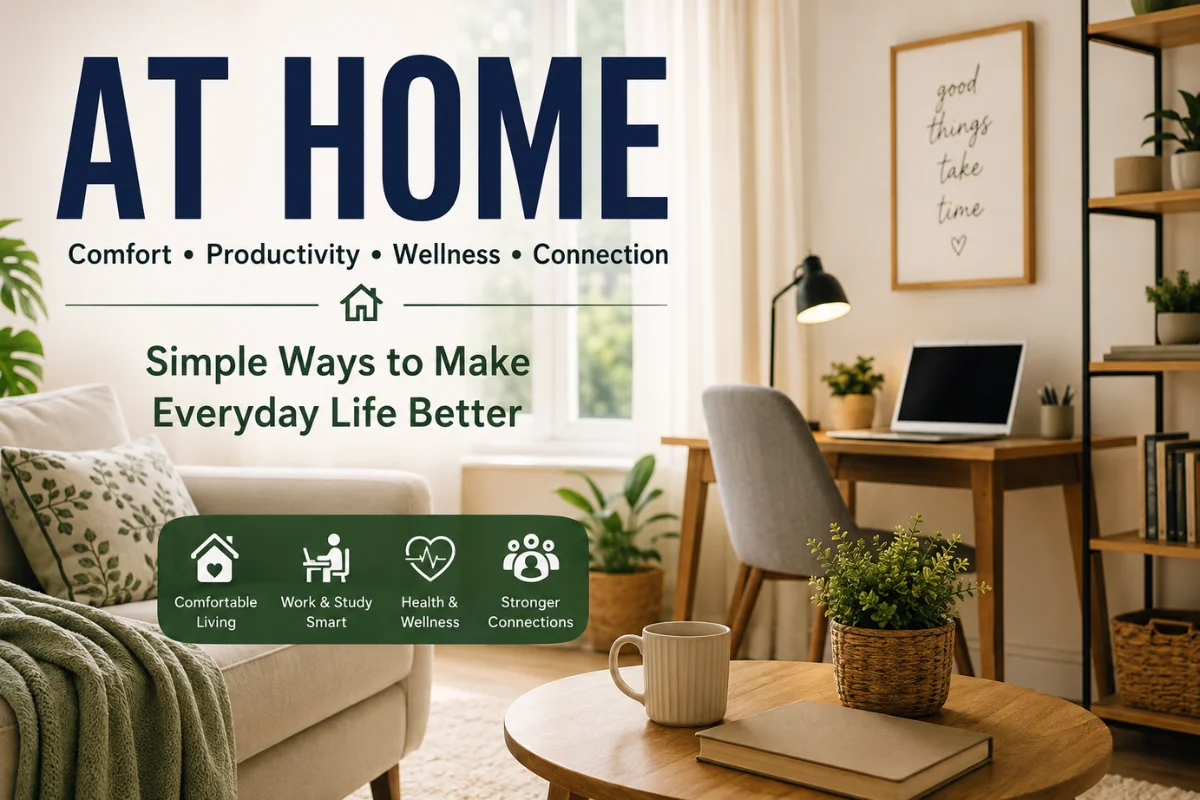
Home is more than just a place to sleep at the end of a busy day. For many people, it is where they work, cook, exercise, relax, spend time with family, entertain friends, and enjoy personal hobbies. As daily routines continue to change, the way people use their homes is changing as well.
In 2026, the idea of at home living is increasingly connected with comfort, wellness, flexibility, and meaningful experiences. Recent home trends show growing interest in spaces designed for relaxation, wellness, social connection, and everyday convenience.
Whether you live in a large house, a small apartment, or a shared space, small improvements can make your home feel more functional and enjoyable. The goal is not necessarily to spend a lot of money. Instead, it is about creating an environment that works well for your lifestyle.
What Does At Home Living Mean?
At home living refers to the activities, routines, and experiences that take place within your own living space.
This can include simple activities such as preparing meals, reading a book, watching a movie, exercising, working remotely, studying, or spending time with family.
It can also involve creating dedicated areas for particular purposes. A quiet corner can become a reading space, while a spare room can serve as an office, workout area, hobby room, or guest room.
The most useful approach is to think about how you actually spend your time rather than designing your home around an idealized lifestyle.
Why Spending More Time At Home Matters
People increasingly want their homes to support more aspects of everyday life.
A comfortable home can make it easier to relax after work, prepare meals, maintain healthy habits, and connect with people you care about.
Current home design research also shows that wellness has become an important consideration. Houzz’s 2026 trend report found significant growth in searches related to wellness rooms and calming home environments.
This does not mean every home needs a private spa or expensive renovation. Even simple changes can create a more peaceful environment.
Creating a Comfortable At Home Environment
Comfort should be the foundation of your living space.
Start with the areas you use most often. If your sofa is uncomfortable, your bedroom feels cluttered, or your workspace causes distractions, those problems can affect your everyday experience.
Keep Important Areas Organized
Organization does not require perfect minimalism.
Instead, give commonly used items a logical place. Store things close to where you normally use them, and avoid allowing frequently handled objects to accumulate on tables and counters.
A few minutes of organization each day can prevent larger cleaning tasks later.
Improve Lighting
Lighting can completely change how a room feels.
Use brighter lighting for areas where you work, study, or prepare food. Softer lighting can be more suitable for bedrooms, living rooms, and relaxation areas.
Natural light is another valuable resource. Opening curtains or blinds during the day can make a room feel brighter and more welcoming.
Add Personal Details
A home should reflect the people who live there.
Photographs, books, artwork, plants, souvenirs, and other meaningful objects can make a space feel personal without requiring a major redesign.
The latest home trends also show growing interest in more personalized, character-rich interiors rather than spaces that feel overly uniform.
Working At Home More Effectively
Remote and hybrid work have changed how people think about their homes.
A dedicated office is useful, but it is not essential. If space is limited, a small desk in a quiet corner can work just as well.
The important thing is to create some separation between work and personal time.
Choose a Dedicated Workspace
Whenever possible, use the same area for work each day.
Keep your computer, charger, notebook, and other essentials nearby. This reduces unnecessary movement and makes it easier to begin working.
At the end of your workday, put away work-related items. This simple habit can create a psychological boundary between professional and personal time.
Reduce Distractions
A television, phone, household chores, and constant notifications can make working at home difficult.
Try to keep your workspace visually simple. Use headphones if background noise is a problem, and schedule short breaks instead of working continuously for long periods.
Exercising At Home
You do not need an expensive home gym to stay active.
Bodyweight exercises, stretching, walking, yoga, resistance bands, and short strength sessions can all be incorporated into a home routine.
Current wellness discussions increasingly emphasize flexible and manageable routines rather than relying exclusively on long workout sessions.
A small open area can be enough for many exercises.
Make Exercise Convenient
The easier it is to start, the more likely you are to maintain the habit.
Keep exercise equipment where it is easy to access. A yoga mat, resistance bands, or a pair of light weights can be stored in a small corner.
You can also schedule short activity breaks during the day. Ten or fifteen minutes of movement can be easier to maintain than waiting for a large block of free time.
Cooking At Home
Cooking is another important part of modern home life.
Preparing meals at home gives you more control over ingredients, portions, flavors, and preparation methods. Research published in 2026 continues to examine the relationship between cooking, food agency, and health-related behavior.
It can also become a social activity.
Families can prepare meals together, couples can experiment with new recipes, and friends can turn dinner preparation into part of a relaxed gathering.
Make Your Kitchen More Functional
You do not necessarily need a complete kitchen renovation.
Start by organizing frequently used ingredients and utensils. Keep everyday cookware easy to reach and reduce unnecessary items on the countertop.
A well-organized kitchen can make cooking feel less like a chore.
Kitchen design is also increasingly focused on multifunctional spaces. Current 2026 design coverage highlights kitchen islands as central areas for food preparation, gathering, and social interaction.
Eating At Home
The way people eat at home is changing too.
A 2026 IKEA global study found that fewer than half of respondents regularly eat dinner at a kitchen table, while some eat on sofas or in other parts of the home. The research reflects how modern routines, screens, space limitations, and schedules influence mealtimes.
While there is nothing inherently wrong with eating on the sofa, creating a comfortable dining routine can encourage people to slow down and connect.
| At-Home Activity | Main Benefit | Simple Improvement |
| Cooking | More control over meals | Organize everyday ingredients |
| Working | Greater convenience | Create a dedicated workspace |
| Exercise | Flexible activity | Keep equipment accessible |
| Reading | Relaxation and focus | Create a quiet corner |
| Entertaining | Social connection | Use flexible seating |
| Relaxing | Stress reduction | Reduce clutter and harsh lighting |
Relaxing At Home
A home should also provide space for doing nothing.
After a busy day, you may not need another productive activity. Sometimes reading, listening to music, watching a favorite program, or simply sitting quietly can be enough.
Creating a relaxing environment starts with reducing unnecessary distractions.
Soft lighting, comfortable furniture, plants, calming colors, and an organized room can help create a more peaceful atmosphere.
Recent design guidance increasingly treats the home as a personal retreat rather than simply a functional building.
Entertaining Friends At Home
Hosting people at home does not have to mean organizing an elaborate dinner party.
Casual gatherings are becoming increasingly popular, with 2026 survey data showing more consumers hosting informal events such as movie nights and casual get-togethers.
You can invite friends for coffee, snacks, a game night, a movie, or a simple meal.
Focus on Comfort Instead of Perfection
A successful gathering does not require a perfectly decorated home.
Comfortable seating, enough space to move around, simple food, and good conversation are usually more important.
Current entertaining trends also favor informal gatherings and flexible spaces where guests can move between different areas of the home.
Creating an At Home Wellness Space
A wellness space can be as simple as a comfortable chair beside a window.
You could use the area for reading, meditation, stretching, journaling, or quiet reflection.
If you have more space, consider creating a dedicated room for exercise or relaxation.
The growing interest in wellness-oriented homes shows that people increasingly want their living environments to support physical and mental well-being. A 2026 Global Wellness Institute report notes that health and wellness are becoming major considerations in home and real-estate design.
Making Outdoor Space More Useful
If your home has a balcony, patio, garden, or small outdoor area, it can become an extension of your living space.
Add comfortable seating, plants, lighting, or a small table. Even limited outdoor space can become useful for morning coffee, reading, meals, or relaxing.
Current 2026 outdoor design trends emphasize creating different zones for dining, lounging, plants, and activities rather than treating an outdoor area as one empty space.
Saving Money By Staying At Home
Spending more time at home can also help manage certain household expenses.
Cooking instead of regularly dining out, exercising without a gym membership, enjoying free entertainment, and hosting friends instead of meeting at expensive venues can all reduce spending.
A 2026 KPMG consumer survey found that saving money was a major reason consumers reported eating at home more often, alongside greater control over ingredients and nutrition.
However, staying home does not automatically mean spending less. Online shopping, subscriptions, food delivery, and home upgrades can quickly add costs.
The key is to use your home intentionally rather than simply spending more time there.
How to Make At Home Life More Enjoyable
You do not need to change everything at once.
Start with one area that causes the most frustration. If your bedroom feels chaotic, organize it. If your workspace is uncomfortable, improve your desk. If you rarely cook because the kitchen feels difficult to use, reorganize your cooking area.
Small improvements often have a bigger practical impact than dramatic changes.
The best home is not necessarily the most expensive or fashionable one. It is the space that supports the way you actually live.
Final Thoughts
Modern at home living is about much more than staying indoors. It is about creating a space that supports work, rest, health, food, entertainment, hobbies, and relationships.
In 2026, home trends increasingly point toward wellness, personalization, flexible spaces, casual socializing, and comfort.
Whether you live in a small apartment or a large family home, you can make meaningful improvements without completely redesigning your space.
Focus on comfort, organization, functionality, and the routines that matter most to you. When your home works with your lifestyle instead of against it, everyday life can become simpler, calmer, and more enjoyable.
