

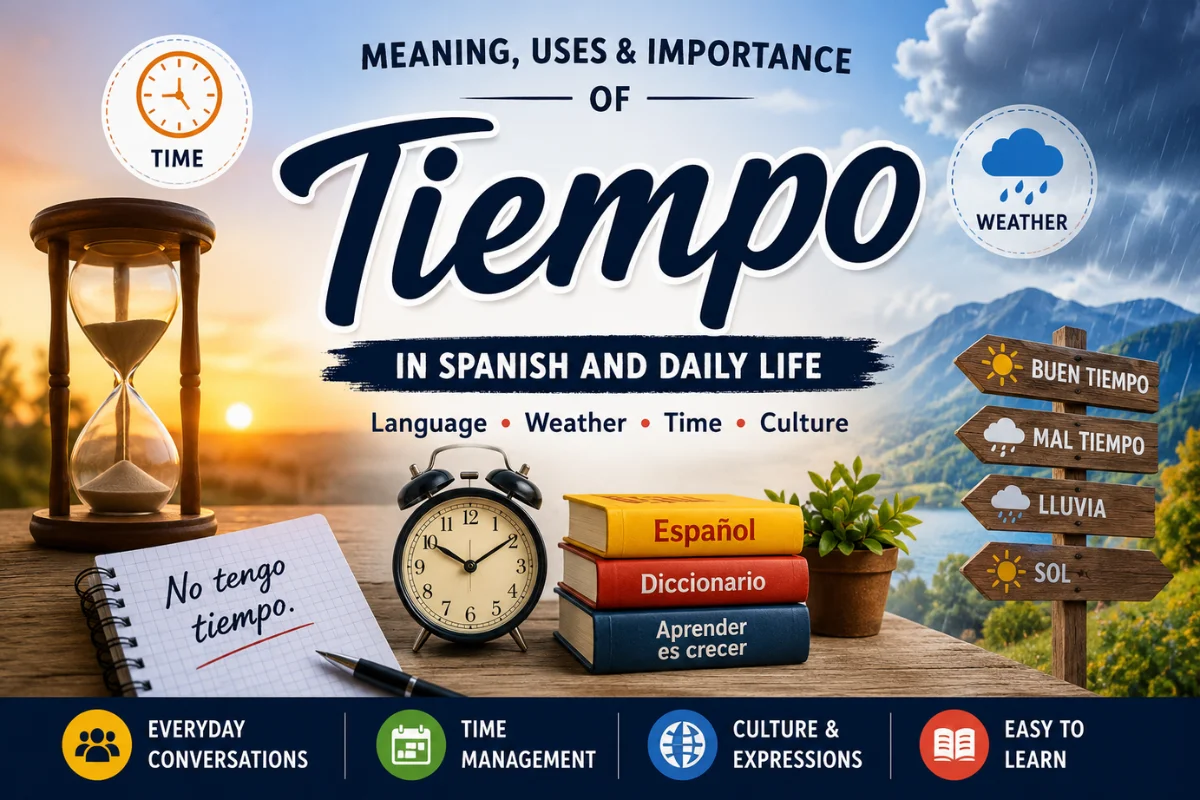
Have you ever come across the word Tiempo and wondered why it appears in so many different situations? If you’re learning Spanish, planning to travel, or simply exploring new languages, this is one of the first words you’ll encounter. While it is often translated as “time,” its meaning extends beyond a simple definition.
In everyday conversations, books, weather reports, and even cultural expressions, this versatile term plays an important role. Understanding how it is used helps learners communicate more naturally and appreciate the richness of the Spanish language.
This guide explores its meanings, common uses, and why it remains one of the most recognizable words in Spanish-speaking communities.
What Does Tiempo Mean?
At its core, Tiempo usually translates to time in English. However, depending on the situation, it can also describe weather, a period of time, or the right moment to do something.
Unlike English, where “time” and “weather” are separate words, Spanish often uses the same word for both ideas. The intended meaning becomes clear through the surrounding sentence.
For example:
- No tengo tiempo. — I don’t have time.
- ¿Qué tiempo hace hoy? — How is the weather today?
Although these sentences use the same word, they refer to completely different concepts.
The History Behind the Word
The origin of this term dates back to the Latin word Tempus, which influenced several modern languages. English words like tempo, temporary, and temporal also share the same historical root.
Over centuries, the Spanish language preserved the original concept while allowing it to develop additional meanings. Today, it is considered one of the most essential words for beginners learning Spanish.
Its long history also explains why it appears in literature, music, science, and daily communication.
Why This Word Has More Than One Meaning
Many languages contain words with multiple meanings, and Spanish is no exception.
Rather than creating separate terms for every situation, context helps determine the correct interpretation.
For instance, if someone is discussing a forecast, the word refers to weather. During a conversation about schedules or appointments, it refers to time.
Native speakers rarely become confused because the surrounding words naturally clarify the intended message.
Common Meanings Explained
Understanding the most common uses makes conversations much easier.
Time
This is the definition most language learners recognize first.
Examples include:
- Free time
- Study time
- Work time
- Family time
- Travel time
Whether discussing daily routines or long-term plans, this meaning appears constantly.
Weather
Another popular meaning relates to weather conditions.
You may hear people discussing:
- Sunny days
- Rainy afternoons
- Cold mornings
- Windy evenings
Spanish speakers naturally use the same word when talking about the day’s forecast.
This surprises many beginners, but it quickly becomes familiar through regular practice.
Duration
Sometimes the word describes how long an activity lasts.
Examples include:
- Exercise sessions
- School holidays
- Business meetings
- Vacation periods
Instead of referring to a specific clock time, it focuses on the length of an event.
Timing
Good timing often influences success.
Whether someone starts a new career, launches a business, or makes an important decision, acting at the right moment can make a significant difference.
This broader meaning appears in motivational quotes and everyday conversations alike.
Everyday Situations Where You Will Hear It
One reason this vocabulary word is so valuable is its frequent use across daily life.
At Home
Families regularly discuss schedules.
Parents remind children about homework, bedtime, meals, and household responsibilities.
As a result, the word becomes part of ordinary conversations from an early age.
At School
Students hear teachers talk about:
- Class schedules
- Exam preparation
- Study sessions
- Break periods
Managing time effectively is a skill encouraged throughout education.
At Work
Professionals use it when discussing:
- Project deadlines
- Meeting schedules
- Business planning
- Productivity
- Client appointments
Almost every workplace relies on careful planning, making the concept relevant across industries.
During Travel
Visitors to Spanish-speaking countries quickly notice the word on television, radio, and public conversations.
It commonly appears when people discuss:
- Weather forecasts
- Flight schedules
- Tour planning
- Seasonal travel
Understanding these everyday expressions can make traveling much easier.
Frequently Used Expressions
Many common Spanish phrases include this versatile word.
Here are some examples that learners often encounter.
| Spanish Expression | English Meaning | Common Situation |
| No tengo tiempo | I don’t have time | Busy schedules |
| Hace mucho tiempo | A long time ago | Talking about the past |
| Al mismo tiempo | At the same time | Comparing events |
| A tiempo | On time | Meetings and appointments |
| Perder el tiempo | To waste time | Productivity discussions |
| Ganar tiempo | To buy time | Problem-solving |
Learning these expressions helps conversations sound more natural.
Its Role in Weather Reports
Weather forecasts are among the most common places where beginners encounter this word.
Television presenters, mobile apps, and newspapers regularly describe changing conditions using familiar expressions.
People may hear references to:
- Clear skies
- Heavy rain
- Strong winds
- Warm temperatures
- Seasonal changes
Even without advanced language skills, recognizing these patterns becomes easier with repeated exposure.
A Connection to Music
Interestingly, English speakers already know a related word: tempo.
Although the meanings are not identical, both come from the same Latin origin and relate to rhythm or the passage of time.
Musicians rely on accurate timing to perform consistently, making the connection easy to remember.
This shared linguistic history also demonstrates how languages influence one another over centuries.
Why Language Learners Should Master It Early
Every language has foundational vocabulary that appears repeatedly.
For Spanish learners, this word belongs near the top of the list because it is useful in so many situations.
It appears in:
- Conversations
- Newspapers
- Television shows
- Books
- Travel guides
- Educational materials
- Weather forecasts
Mastering these everyday terms builds confidence and improves comprehension much faster than memorizing uncommon vocabulary.
The Cultural Value Behind the Word
Beyond grammar and vocabulary, the idea of time carries cultural significance.
Different societies view schedules, punctuality, and daily routines in unique ways. Some cultures emphasize exact timing, while others focus more on relationships and flexibility.
Understanding these differences helps learners communicate respectfully and avoid misunderstandings when interacting with people from various Spanish-speaking regions.
Tiempo in Literature and Storytelling
Language becomes more meaningful when it is used to tell stories, and this word appears frequently in novels, poems, essays, and historical writing. Authors often use it to describe memories, personal growth, life experiences, and the passing of years.
A story may begin by looking back at childhood, move through important life events, and end by reflecting on how people change over the years. In these situations, the idea of time is not simply about clocks or calendars. Instead, it becomes a way to show emotions, learning, and personal development.
Writers also connect changing seasons with changes in life. A bright, sunny day may represent hope, while stormy weather can symbolize challenges or uncertainty. This creative use makes stories more engaging and memorable.
The Role of Tiempo in Modern Technology
Technology has changed how people organize their daily lives, making time management easier than ever before.
Today, people rely on digital tools for:
- Scheduling meetings
- Setting reminders
- Tracking deadlines
- Planning vacations
- Checking weather forecasts
- Managing daily routines
Many Spanish-language websites and mobile applications also use this familiar word when displaying forecasts, calendars, and scheduling features. Because of this, language learners often encounter it while using everyday digital services.
The growing popularity of smart devices has made understanding common vocabulary even more useful for users around the world.
Why It Matters for Travelers
Traveling becomes much easier when you understand frequently used local vocabulary.
Visitors to Spanish-speaking countries often hear this word in airports, hotels, train stations, restaurants, and public transportation systems.
For example, it may appear when discussing:
- Departure schedules
- Arrival times
- Weather conditions
- Tour availability
- Seasonal travel
Knowing these basic expressions helps travelers feel more confident while communicating with local people.
It also improves the overall travel experience by reducing confusion in everyday situations.
Using Tiempo in Daily Life
Although many people first learn the word in a classroom, they quickly realize how often it appears in ordinary conversations.
It can be connected with:
- Morning routines
- Family activities
- Office meetings
- School schedules
- Weekend plans
- Holiday preparations
Because it applies to so many situations, learners naturally remember it through repeated exposure rather than memorization alone.
Practical Tips for Better Time Management
The concept behind this word also reminds us to value our daily routines.
Managing time wisely can improve both personal and professional life.
Here are a few practical habits that can help:
- Start each day with clear priorities.
- Break large projects into smaller tasks.
- Avoid unnecessary distractions while working.
- Take short breaks to stay focused.
- Review your goals regularly.
- Balance work, learning, and relaxation.
Small improvements in daily habits often lead to long-term success.
Interesting Facts
Here are some facts that make this word especially interesting.
- It is one of the first vocabulary words taught in beginner Spanish courses.
- Its meaning changes depending on the context of the sentence.
- It comes from the Latin word Tempus.
- It appears in books, songs, newspapers, movies, and everyday conversations.
- It is commonly heard in weather forecasts across Spanish-speaking countries.
- Millions of people use it every day without giving its multiple meanings a second thought.
These characteristics make it one of the most versatile words in the Spanish language.
Common Mistakes Beginners Make
New learners sometimes assume that every language uses separate words for “time” and “weather.”
This often causes confusion during the early stages of learning Spanish.
Another common mistake is translating every sentence word for word instead of understanding the overall meaning.
The best approach is to focus on the complete sentence rather than individual words.
With regular reading and listening practice, recognizing the correct meaning becomes much easier.
Easy Ways to Remember It
Learning vocabulary is easier when it becomes part of your daily routine.
You can improve your understanding by:
- Reading Spanish news articles.
- Watching weather forecasts.
- Listening to Spanish podcasts.
- Practicing simple conversations.
- Using language-learning apps.
- Reviewing common phrases every day.
Consistent practice is far more effective than trying to memorize long vocabulary lists in a single session.
The Importance of Context
One of the most valuable language skills is understanding context.
The same word can express different ideas depending on the surrounding sentence.
For example, someone discussing weekend plans is likely referring to available time, while a television presenter describing rain or sunshine is clearly talking about the weather.
Recognizing these differences helps learners communicate more naturally and understand spoken Spanish with greater confidence.
Learning Beyond Vocabulary
Understanding a language is about more than memorizing definitions.
It also involves learning how native speakers express ideas, organize conversations, and describe everyday experiences.
Words with multiple meanings encourage learners to pay closer attention to context, sentence structure, and cultural habits.
Over time, this creates stronger communication skills and a deeper appreciation for the language itself.
Why This Word Will Continue to Be Important
As Spanish continues to grow as one of the world’s most widely spoken languages, foundational vocabulary remains essential for learners.
Educational platforms, travel resources, online courses, and digital communication tools continue to introduce beginners to commonly used words that appear across many situations.
Because this term connects language, weather, schedules, planning, and daily life, it will remain one of the most practical words for anyone learning Spanish.
Whether your goal is travel, education, work, or personal interest, understanding its different meanings provides a strong foundation for future learning.
Final Thoughts
Learning Tiempo is about much more than knowing a simple translation. It introduces learners to the flexibility of the Spanish language and demonstrates how context shapes meaning. Whether it refers to time, weather, duration, or the right moment, this single word appears in countless real-life situations.
From classrooms and workplaces to travel experiences and everyday conversations, it continues to play an essential role in communication. By understanding its different uses and practicing it in context, learners can build stronger language skills while gaining a deeper appreciation for Spanish culture and expression.
Mastering common vocabulary like this is one of the simplest ways to improve confidence, communicate naturally, and enjoy the language-learning journey.
