

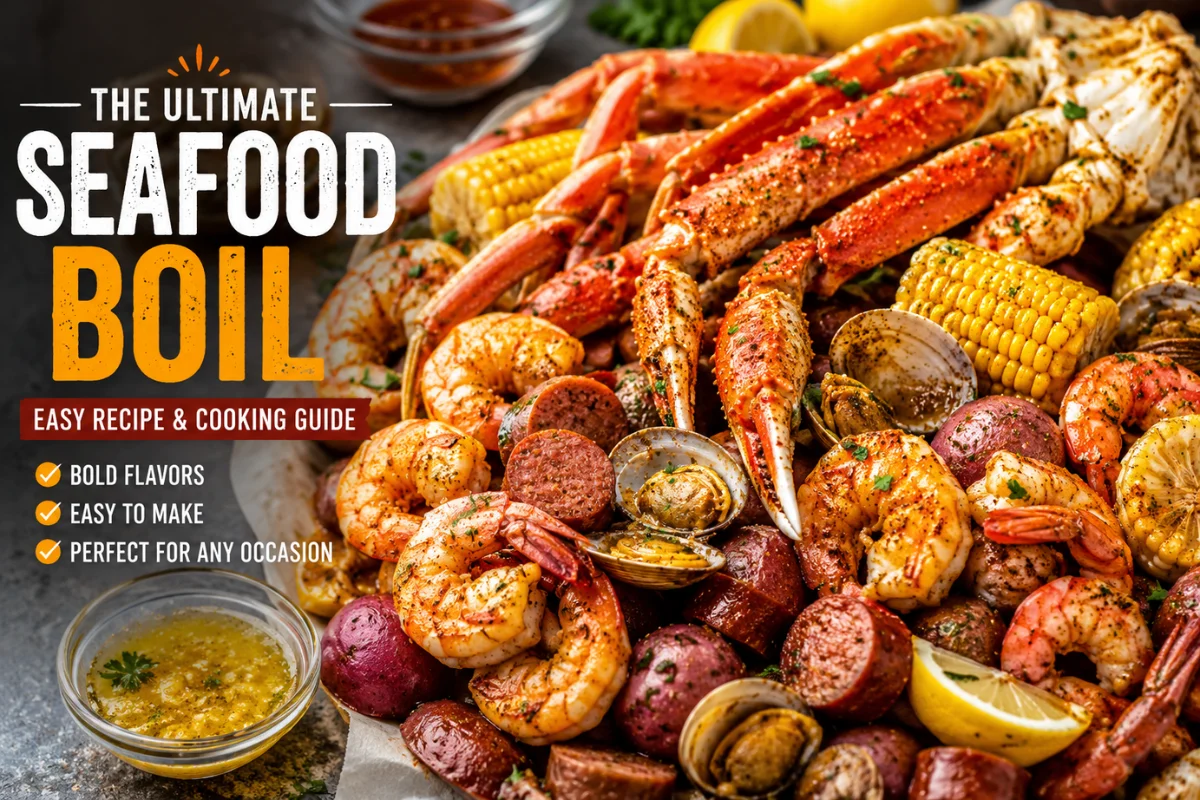
Seafood boils have become one of the most popular ways to enjoy seafood with family and friends. They combine fresh seafood, vegetables, sausage, and bold seasonings into one delicious meal that is both comforting and exciting. Whether you’re hosting a backyard gathering or preparing a special dinner, a seafood boil brings people together around a table full of vibrant flavors.
Unlike many seafood dishes that require separate cooking methods for each ingredient, a seafood boil is prepared in one large pot. The result is a meal where every ingredient absorbs the rich, buttery, and spicy flavors of the broth.
This guide covers everything you need to know about seafood boils, from their history and essential ingredients to cooking techniques and serving suggestions.
What Is a Seafood Boil?
A seafood boil is a classic communal dish where seafood, vegetables, and seasonings are cooked together in a single pot, creating a meal that’s rich in flavor and perfect for sharing. Once cooked, everything is typically drained and served together on a large tray or directly on a table lined with parchment paper.
The meal is known for its casual style of dining. Instead of individual plates, everyone shares the feast, making it perfect for celebrations, holidays, birthdays, and weekend get-togethers.
Depending on the region, a seafood boil may include shrimp, crab, lobster, crawfish, mussels, clams, corn on the cob, potatoes, smoked sausage, and a generous amount of seasoned butter sauce.
The History of Seafood Boils
Seafood boils have deep roots in coastal communities across the United States. Different regions developed their own traditions based on locally available seafood and cultural influences.
In Louisiana, crawfish boils became a seasonal tradition that celebrates fresh crawfish harvests every spring. These gatherings often feature spicy Cajun seasonings and lively outdoor celebrations.
Along the Atlantic coast, crab boils became popular in areas known for blue crabs, while Southern coastal states developed Low Country boils using shrimp, corn, potatoes, and smoked sausage.
Over time, seafood boils spread across the country. Today, restaurants and home cooks continue to create their own versions using a wide variety of seafood and custom spice blends.
Why Seafood Boils Are So Popular
There are several reasons why seafood boils continue to grow in popularity.
- They are easy to prepare in one pot.
- They feed large groups without much effort.
- Every bite is packed with bold seasoning.
- The recipe is highly customizable.
- They create a fun and interactive dining experience.
Many people also enjoy experimenting with different spice levels, butter sauces, and seafood combinations, making every seafood boil unique.
Essential Ingredients for a Seafood Boil
The beauty of a seafood boil lies in its flexibility. You can keep it simple or create an extravagant feast using a variety of seafood.
Seafood
Popular seafood choices include:
- Shrimp
- Snow crab legs
- King crab legs
- Lobster tails
- Crawfish
- Mussels
- Clams
- Scallops
Fresh seafood provides the best flavor, but frozen seafood works well when properly thawed.
Vegetables
Vegetables balance the richness of the seafood while soaking up the flavorful broth.
Common choices include:
- Corn on the cob
- Baby potatoes
- Garlic
- Onions
- Lemon halves
Meat
Many recipes include smoked sausage, which adds a smoky, savory flavor that pairs perfectly with seafood.
Popular options include:
- Andouille sausage
- Smoked beef sausage
- Chicken sausage
Seafood Boil Seasonings
Seasoning is what transforms simple ingredients into a memorable seafood feast.
A classic seafood boil often includes:
- Old Bay seasoning
- Cajun seasoning
- Paprika
- Garlic powder
- Onion powder
- Black pepper
- Cayenne pepper
- Red pepper flakes
- Bay leaves
- Salt
Many cooks also add fresh garlic, lemons, butter, and herbs to create an extra layer of flavor.
The amount of spice can easily be adjusted based on personal preference.
Equipment You’ll Need
Preparing a seafood boil doesn’t require expensive equipment.
Most home cooks only need:
- Large stockpot
- Strainer basket (optional)
- Long cooking spoon
- Tongs
- Sharp knife
- Large serving tray
- Paper towels or seafood crackers for serving
If you’re cooking for a large gathering, an outdoor propane burner and oversized pot make the process much easier.
Step-by-Step Seafood Boil Recipe
Cooking this delicious seafood dish is simple when each ingredient is added at the right time.
Prepare the Broth
Fill a large stockpot with water.
Add:
- Cajun seasoning
- Old Bay seasoning
- Garlic
- Onion
- Lemon halves
- Bay leaves
Bring everything to a rolling boil.
Cook the Potatoes
Baby potatoes require the longest cooking time.
Add them first and cook for about 12–15 minutes until they begin to soften.
Add Sausage
Next, add sliced smoked sausage.
Cook for another 5 minutes so it absorbs the flavorful broth.
Add Corn
Corn cooks quickly but still needs several minutes.
Boil for approximately 5–7 minutes.
Add the Seafood
Seafood cooks rapidly, so add it near the end.
A general guide is:
- Shrimp: 2–4 minutes
- Crab legs: 5–7 minutes
- Lobster tails: 6–8 minutes
- Mussels and clams: Until the shells open
Avoid overcooking, as seafood can quickly become rubbery.
Garlic Butter Sauce
Many people finish their seafood boil with a rich garlic butter sauce.
Typical ingredients include:
- Melted butter
- Fresh minced garlic
- Cajun seasoning
- Paprika
- Lemon juice
- Fresh parsley
- Black pepper
Once everything is cooked, toss the seafood and vegetables in the warm butter sauce before serving.
This simple step adds richness and helps coat every ingredient with bold flavor.
Seafood Boil Ingredient Guide
| Ingredient | Purpose | Typical Cooking Time |
| Baby Potatoes | Base vegetable | 12–15 minutes |
| Smoked Sausage | Smoky flavor | 5 minutes |
| Corn on the Cob | Sweetness and texture | 5–7 minutes |
| Shrimp | Main seafood | 2–4 minutes |
| Crab Legs | Rich seafood flavor | 5–7 minutes |
| Lobster Tails | Premium seafood option | 6–8 minutes |
| Mussels & Clams | Briny flavor | Until shells open |
Tips for the Best Seafood Boil
A few simple techniques can make a big difference in the final result.
- Use fresh seafood whenever possible.
- Don’t overcrowd the pot.
- Add ingredients according to their cooking times.
- Taste the broth before adding seafood.
- Finish with plenty of garlic butter.
- Serve immediately while everything is hot.
- Garnish with fresh parsley and lemon wedges for extra freshness.
Popular Seafood Boil Variations
One of the reasons seafood boils remain so popular is their versatility. You can easily customize the ingredients and seasoning to suit different tastes, dietary preferences, or regional traditions.
Cajun Seafood Boil
This Southern-style dish is famous for its bold, spicy flavors.
It typically includes shrimp, crawfish, smoked sausage, corn, potatoes, and a generous amount of Cajun seasoning. Garlic butter is often added at the end for an extra layer of richness.
Low Country Boil
Originating in the southeastern United States, the Low Country boil features shrimp, corn, potatoes, and smoked sausage. Compared to Cajun-style boils, the seasoning is generally milder and focuses on fresh, savory flavors.
Crab Boil
If you’re a crab lover, this version highlights snow crab legs, king crab legs, or blue crabs. Many people pair the crab with buttery dipping sauce and fresh lemon wedges.
Lobster Seafood Boil
For a more luxurious meal, lobster tails are combined with shrimp, crab, and vegetables. This variation is often served during holidays or special occasions.
What to Serve with a Seafood Boil
Although this dish is satisfying on its own, adding a few side dishes can make the meal even more enjoyable.
Popular side options include:
- Garlic bread
- Coleslaw
- Fresh green salad
- Cornbread
- French fries
- Steamed rice
- Macaroni and cheese
- Pickles
- Lemon wedges
- Extra garlic butter sauce
Refreshing beverages like iced tea, lemonade, or sparkling water also pair well with the rich flavors of seafood.
Is a Seafood Boil Healthy?
This flavorful meal can be part of a balanced diet, especially when prepared with fresh ingredients.
Seafood is naturally rich in:
- High-quality protein
- Omega-3 fatty acids
- Vitamin B12
- Selenium
- Zinc
- Iodine
Potatoes provide complex carbohydrates, while corn contributes fiber and essential nutrients.
However, keep in mind that butter, sausage, and seasoning blends can increase the amount of sodium, saturated fat, and calories. If you’re looking for a lighter version, use less butter, choose lean sausage, and season with herbs and fresh lemon juice.
How to Store Leftovers
Seafood is best enjoyed fresh, but leftovers can still taste great when stored properly.
- Allow the food to cool before refrigerating.
- Store seafood and vegetables in airtight containers.
- Refrigerate within two hours of cooking.
- Consume leftovers within 2 to 3 days for the best quality.
If you plan to freeze leftovers, separate the seafood from the vegetables whenever possible to help maintain texture.
How to Reheat a Seafood Boil
Reheating seafood gently helps preserve its flavor and texture.
Steaming
Place the seafood in a steamer basket for several minutes until heated through. This method helps prevent it from drying out.
Oven
Wrap the seafood in aluminum foil with a little butter and bake at a low temperature until warm.
Stovetop
Heat everything in a skillet over medium-low heat with a splash of butter or broth.
Avoid using high heat or cooking for too long, as seafood can quickly become tough.
Common Mistakes to Avoid
Even simple recipes can go wrong if you’re not careful. Here are some common mistakes to avoid:
- Overcooking shrimp or lobster
- Adding all ingredients at the same time
- Under-seasoning the broth
- Forgetting to taste the cooking liquid
- Using seafood that isn’t fully thawed
- Serving the meal after it has cooled
Paying attention to cooking times and seasoning will make a noticeable difference in the final result.
Frequently Asked Questions
Can I use frozen seafood?
Yes. Frozen seafood works very well when thawed properly before cooking.
What is the best seafood for beginners?
Shrimp is an excellent choice because it cooks quickly, is widely available, and pairs well with many seasonings.
Can I make a seafood boil without sausage?
Absolutely. Simply omit the sausage or replace it with extra vegetables if you prefer.
How spicy should a seafood boil be?
That depends on your preference. You can easily adjust the amount of Cajun seasoning, cayenne pepper, or chili flakes to make it mild or extra spicy.
Can I prepare the broth ahead of time?
Yes. Making the seasoned broth in advance can save time and allow the flavors to develop even further.
Final Thoughts
This flavorful feast is more than just a recipe—it’s a shared dining experience that brings people together. From the first bite of perfectly cooked shrimp to the buttery corn and tender potatoes, every ingredient contributes to a meal that feels both comforting and festive.
The beauty of a seafood boil lies in its flexibility. You can keep it simple with shrimp and vegetables or create an impressive spread featuring crab, lobster, mussels, and your favorite seasonings. With the right ingredients, careful timing, and a flavorful garlic butter sauce, it’s easy to prepare a seafood feast that everyone will enjoy.
Whether you’re planning a casual family dinner, celebrating a special occasion, or hosting friends for the weekend, a homemade seafood boil is a delicious way to create memorable moments around the table.
